

Chapter 1
The Jeff Nixon Teaching Philosophy
“Golf is not mastered through positions alone. Great golf is developed through understanding movement, balance, pressure, and the clubface.”
Introduction
Every golfer is unique. Different body types, athletic backgrounds, flexibility, and learning styles require an instructor to adapt rather than force every player into the same model.
My philosophy is to simplify the golf swing into concepts that are easy to understand, repeat under pressure, and apply on the golf course. Rather than focusing on dozens of swing thoughts, I teach a small number of principles that influence many parts of the motion at once.
The objective is to create golfers who understand why the ball behaves the way it does and who can make informed adjustments instead of relying on trial and error.
Five Principles of Better Golf
- 1. The Clubface Controls Everything
- 2. Balance Creates Consistency
- 3. Pressure Moves Before Rotation
- 4. Width Produces Speed
- 5. Simplicity Wins
My Teaching Process
- Observe ball flight.
- Identify the primary cause.
- Make one meaningful change.
- Confirm improvement through feedback.
- Reinforce with a simple drill.
- Develop a practice plan.
- Transfer the skill to the golf course.
The Student’s Responsibility
Improvement comes from deliberate practice. Lessons provide direction, but progress depends on consistent repetition with purpose. Each practice session should have a clear objective, measurable feedback, and time for reflection.
Key Coaching Concepts
- Surfing the Line
- The Corner Drill
- Pressure Before Rotation
- Width Creates Speed
- Train the Motion, Not the Position
Chapter Summary
Great golf is built on sound fundamentals, efficient movement, and an understanding of how the club influences the golf ball. By mastering a few key concepts and practicing them consistently, players can develop a swing that is both repeatable and adaptable.
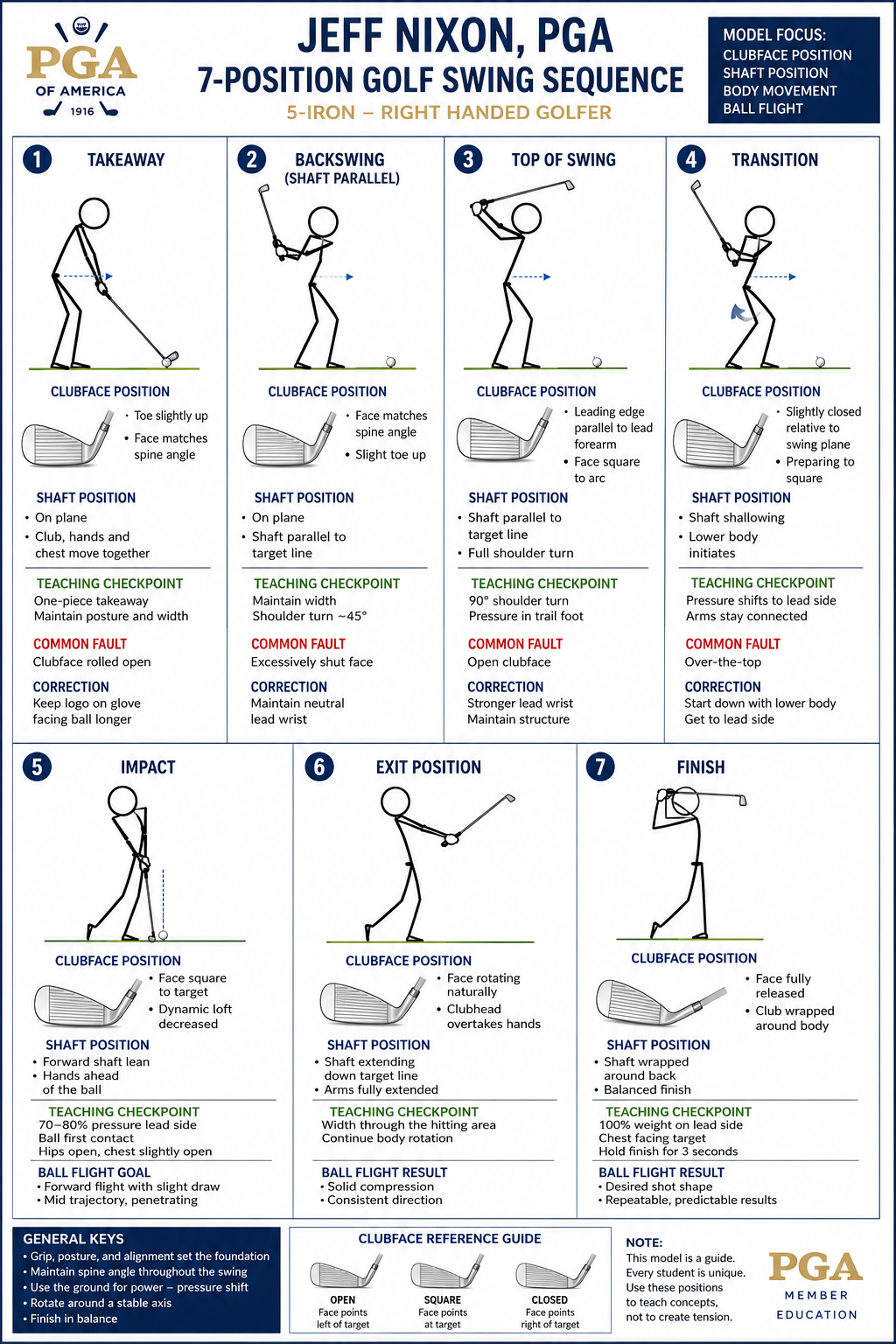
Jr Clinic